

One of the most striking things I have heard from children this summer is the sense they are expected to make decisions about their futures but feel they do not have the information, opportunities or support to make their aspirations a reality.
This was one of the main themes when I recently visited West Yorkshire for The Big Future.
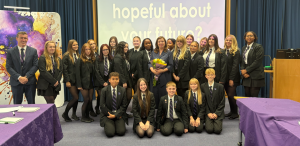
At Outwood Grange Academy in Wakefield, I met young people with incredible ambitions for the future to become doctors, mental health nurses, teachers, scientists, psychiatrists and journalists. One wanted to be an anaesthetist, explaining simply: “I want to help take people’s pain away.”
Another wanted to run her own childcare business and was already thinking about the GCSEs and A-Levels she would need to open the pathway for her. Others were excited about the prospect of careers in film, criminology and politics.
It was evident, these were young people who knew the careers and jobs they wanted, but they questioned how they could get there. They wondered if there would be local opportunities to help them achieve their dreams.
I heard similar messages when we talked about work experience and employment. One young person found a volunteering opportunity at a charity shop, but she had to seek it out independently. Others felt overlooked by employers, despite skills and enthusiasm they could bring.
“Young people have a lot to offer employers, but people think we have a bad reputation” one boy told me.
Another pointed out that young people had different perspectives and could bring new strengths to existing work teams.
I heard similar sentiments elsewhere on The Big Future roadshow.
It’s clear we need far more opportunities. Young people cannot rely on luck, personal connections or their own determination to get onto the first rung of the career ladder. They need accessible work experience, good careers advice, vocational options and employers who recognise their potential.
And they need to know that taking a different route, or changing direction, does not mean they have failed.
But the young people I met in Wakefield were thinking about more than their future careers. They were thinking about their lives, the pressures their families were facing, the lives they want to afford and the communities they want to grow up in.
The cost of university was a particular concern. One young person who wanted to become a doctor voiced concerns about the length and expense of training. Others wanted more affordable university costs, pointing to the struggles of older siblings trying to find good jobs despite doing well at university.
These are not abstract worries. Children are watching the adults around them and trying to work out what their own futures might look like. They see the cost of living, the difficulty of finding work and the sacrifices families make. They were trying to understand whether working hard will simply be enough.
We should take that uncertainty seriously.
Young people also spoke of the need to have things to do in their local community outside of school. One told me: “There is nothing to do around here that is free other than to sit in a field.”
Another spoke about local bowling, but it being too expensive to do regularly. The children wanted a community centre or somewhere they could meet friends and take part in activities without significant costs.
This is a message I have heard repeatedly as part of my travels on The Big Future roadshow. Children want places where they can spend time together, build friendships and enjoy being young.
Yet too often, the opportunities available to them depend on what their families can afford or whether there is somewhere suitable nearby.
If we want children to spend less time on phones and devices, we need to take this seriously. We cannot simply tell them to put their screens away without making sure there is something for them to do when they do.
What has struck me throughout my visits is how much children are thinking about the future, and how keen they are to have a say in it.
They want better political education in schools to understand and influence decisions. They want better mental health support locally, more affordable transport, and more help for young people with additional needs.
Ultimately, they want school to help better prepare them for adult life.
The young people I met in West Yorkshire reminded me that children are not short on ambition, ideas or opinions. They want to contribute, to find fulfilling work, to feel safe, to spend time with their friends and to believe that the effort they put in today will help build a good life tomorrow.
It’s our responsibility to make sure they have the opportunities to do that.