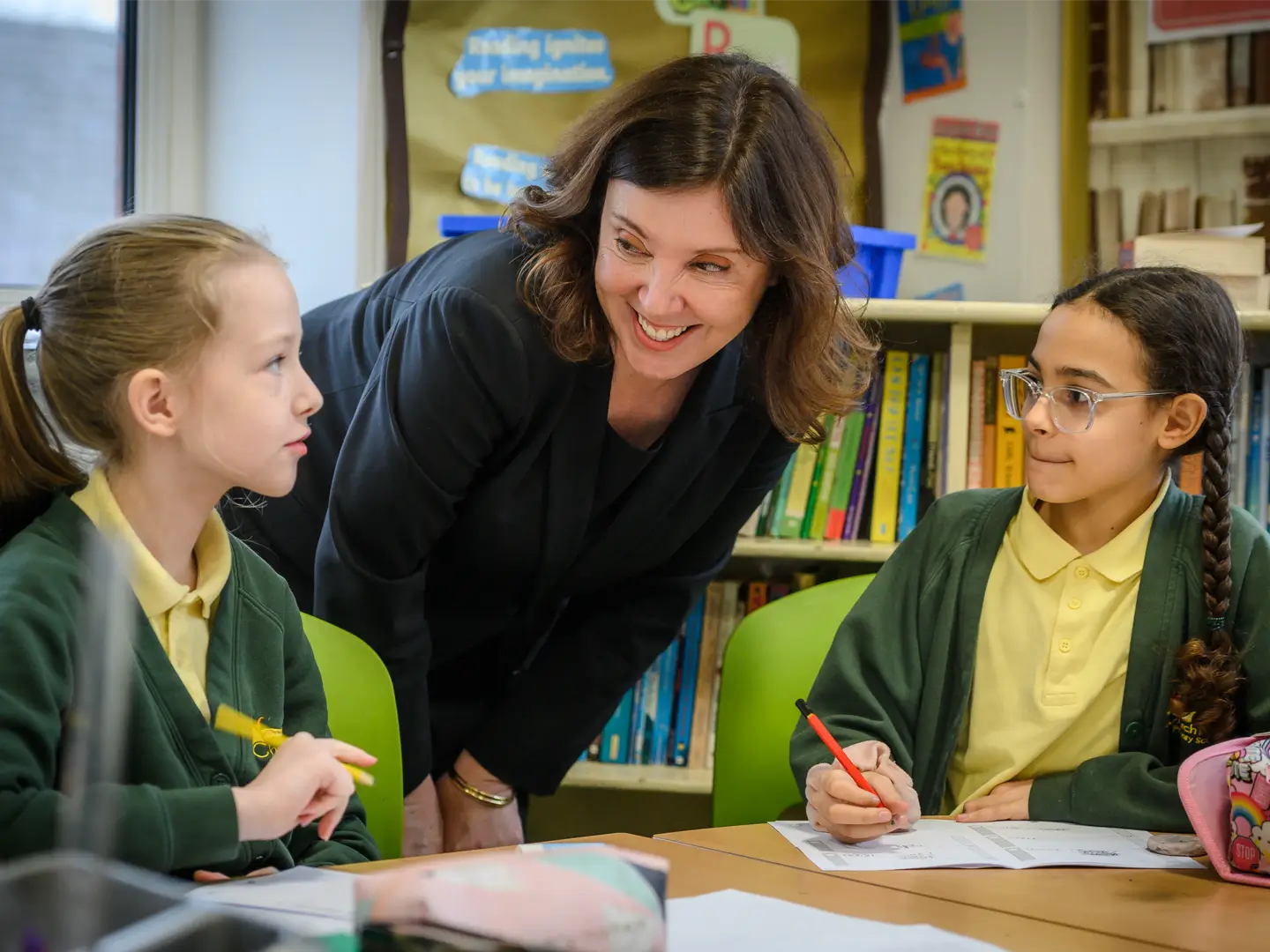


The Childhood Lottery
The Children’s Commissioner Dame Rachel de Souza’s landmark dataset brings together 162 measures of children’s lives to build a comprehensive picture of the areas in England where it is the hardest to grow up.
The Childhood Lottery finds vast differences in children’s experiences depending on where they live – from access to health and social care, education and housing, to safety in their community, opportunities to play and whether children have a meaningful voice in the decisions made by leaders.
Drawing on the Commissioner’s statutory data powers, alongside information from public bodies across England, The Childhood Lottery data sets out the scale of challenges faced by children across all areas of the country and all areas of their lives – but more significantly, the variation that exists across the country, revealing it is harder to be a child in some parts of England than others.
Explore our interactive map by hovering over different parts of England to see the childhood experience in your local area. Filter by pillar, metric and local authority – for mobile use, use the blue arrow to filter the interactive map.
Data can never tell the whole story. In order to obtain the fullest possible picture, data has been collected from a range of sources across differing boundaries, such as ICBs and policing areas. This will have varying impacts on local authorities, some of which is outside of their control. The metrics include child poverty, and other demographic measures, which a local authority may have the tools to partially respond to but not fundamentally address – and which may make a child’s experience, and indeed the ability to deliver services, much more challenging. With that in mind, The Childhood Lottery is not intended to compare the performance of local authorities, but instead to illustrate how childhood might be experienced in every part of the country.
You cannot choose where you are born, or the needs you are born with, and so children experience variance based on a combination of their needs and the services available in their local area. The Commissioner has worked to explore what this may mean for children’s lives in the context of national policy change which shifts the focus towards devolved power and has used to data to make a series of recommendations about how the system best harnesses the opportunities presented by these changes to make life better for every child in every postcode.

The Childhood Lottery shines a light on the areas where childhood is hardest and children need our attention most. Children are being failed across the country and every local area has work to do to improve children’s lives. Devolution offers a unique opportunity to tackle the inequality I have found. Central government must support local areas to raise standards, with urgent action where children are being failed.