

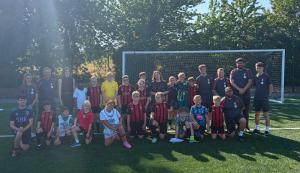
The first child I spoke to at Bournemouth Football Club was beaming. The day before he had scored a hat-trick in a final at a competition, in Fulham.
When I asked a second girl what the best thing about playing football here – at AFC’s Impairment Under 12s – I was told about her improvement: “I was rubbish when I started here. And I’m better now. “
Their coach cut in: “You weren’t ever rubbish. But you’re right, you’re really good now.”
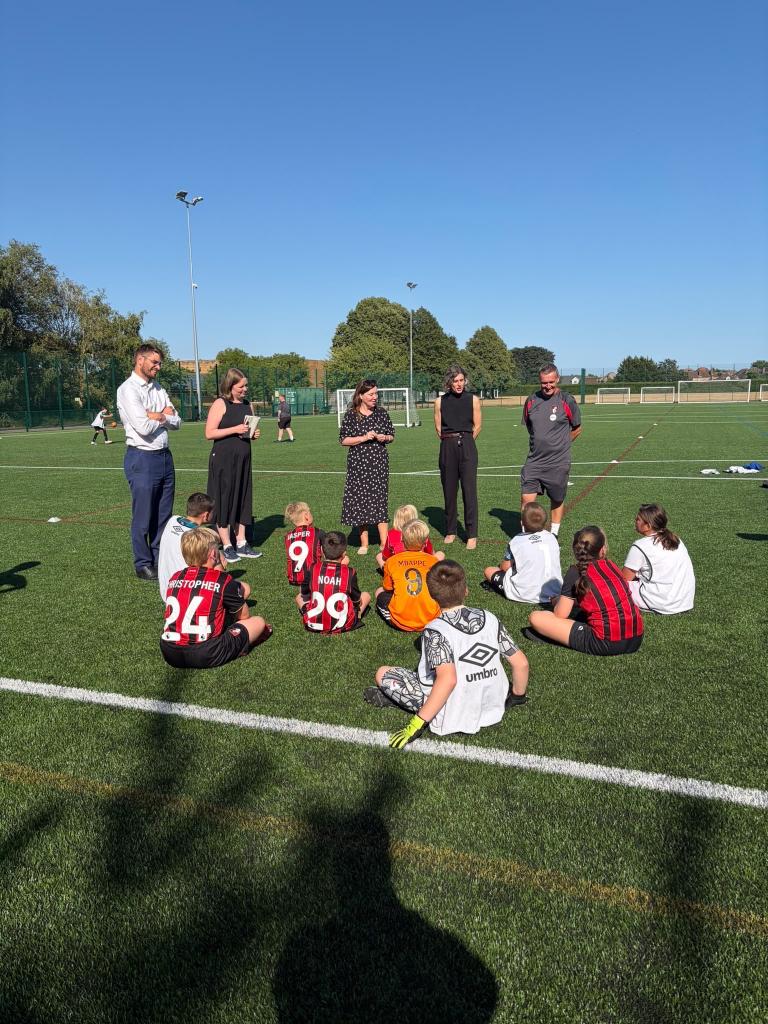
I’ve written previously about how children need spaces where they can fail, and know that doing so is okay. This, I truly believe, is essential for building resilience. This is the joy of organised play – the ability to fail at something, to get better, to feel yourself improve.
Just as important, though, is disorganised play. Play with no clear objective. The kind of play at which it is impossible to be rubbish, precisely because it is impossible to be good. No-one, for instance, is ‘really good at swinging on the swings.’
And yet, when I travel the country and speak with children as part of The Big Future, I hear again and again that opportunities to play are shrinking. Youth clubs have closed. Green spaces feel unsafe, or simply aren’t there. Children tell me they want somewhere to go and something to do, and that the absence of it is felt keenly.
Streets that a generation ago rang with the sound of children playing out are now, in many places, quiet. This should trouble us more than it does. Play is not a luxury to be afforded once the serious business of education and safeguarding has been attended to. Play is, in and of itself, a deeply serious business.
We know that play matters. Bernard Suits put it nicely in his playful riff on The Ant and the Grasshopper, games are the ‘voluntary attempt to overcome unnecessary obstacles’. Playing games he says, is not frivolous, it is the ideal existence. Chesterton, too, understood this; he wrote that ‘Earth is a task garden; heaven is a playground.’
We need more play, not less. More space, more time, more permission for children simply to play. This means investment in youth services and green spaces, yes, but it also means a cultural shift: a willingness to let children be children. An acceptance that that means that sometimes, they will be loud, or messy. It means a nation that values children, that looks at attempts to drive them out of the public realm as what they are: anti-social, in the most literal sense of the world. It means a nation that looks at the proliferation of NO BALL GAMES signs at the same time that we devote vast swathes of our urban spaces over to cars as a fundamental and contradictory form of unfairness.
But there is another truth I have been examining recently, and it is this: not every child has equal access to play, even now. Disabled children tell me, time and again, that the playgrounds built for their peers were not built with them in mind. This is not a small unfairness. Like I said earlier, play is a serious business, and to exclude a child from play is to exclude them from something quite fundamental to childhood.
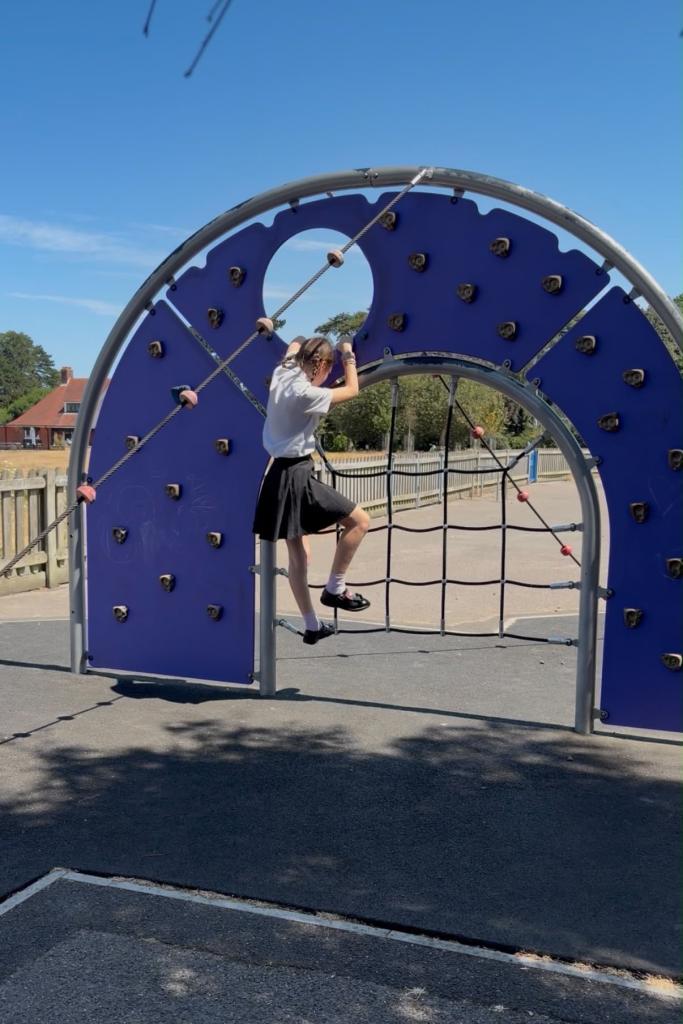
We need to think about how we update our playgrounds – for better access, yes, but for other reasons too. As I stood in that sunny playground in Bournemouth, I realised that it wasn’t just me and my staff huddled in the one small patch of shade – the children, too, were doing the same; sun glare and sunburn were no fun at all for children with sensory issues. I heard about the impact the changing climate has on play, for instance: “When it’s sunny and it’s really hot, then the slide heats up. The metal gets too hot. I can’t go on it.”
Then there are the older teenagers, who fall into a gap that our services rarely seem to notice. Too old for the playground, too young for the adult world, they are often left with nowhere at all. Youth clubs, where they still exist, are frequently pitched at younger children. Meanwhile, elsewhere they are eyed with suspicion the moment they gather in a group of more than two – as do younger children, for whom the presence of 16-year-olds is perceived as no fun at all.
If play matters, and I believe it does, then it must matter for all children. It cannot be that we build wonderful play spaces and quietly accept that some children can never reach them, nor can we conclude that some children have aged out of needing spaces to be.