
I wrote last week about why we should listen to children. This week, I have found myself thinking about what it means to give children a voice.
Sometimes, this is cultural. As I stood outside Nottingham University with my team, our conversation turned from the session with educational psychologists I had just taken part in, to our next stop, a theatre. Perhaps the children would perform some Shakespeare for us there. Could we join in with them? Did we remember any?
We did. Most of us could reel off a shaky and half-remembered soliloquy. We could all do some of the more memorable lines – once more unto the breach, dear friends, once more; or close the wall up with our English dead. It is those half-remembered snatches of poetry, of great art, that we find ourselves leaning on as human beings – Ozymandias when faced with hubris, Henry V when faced with impossible odds, or Larkin with intergenerational strife.
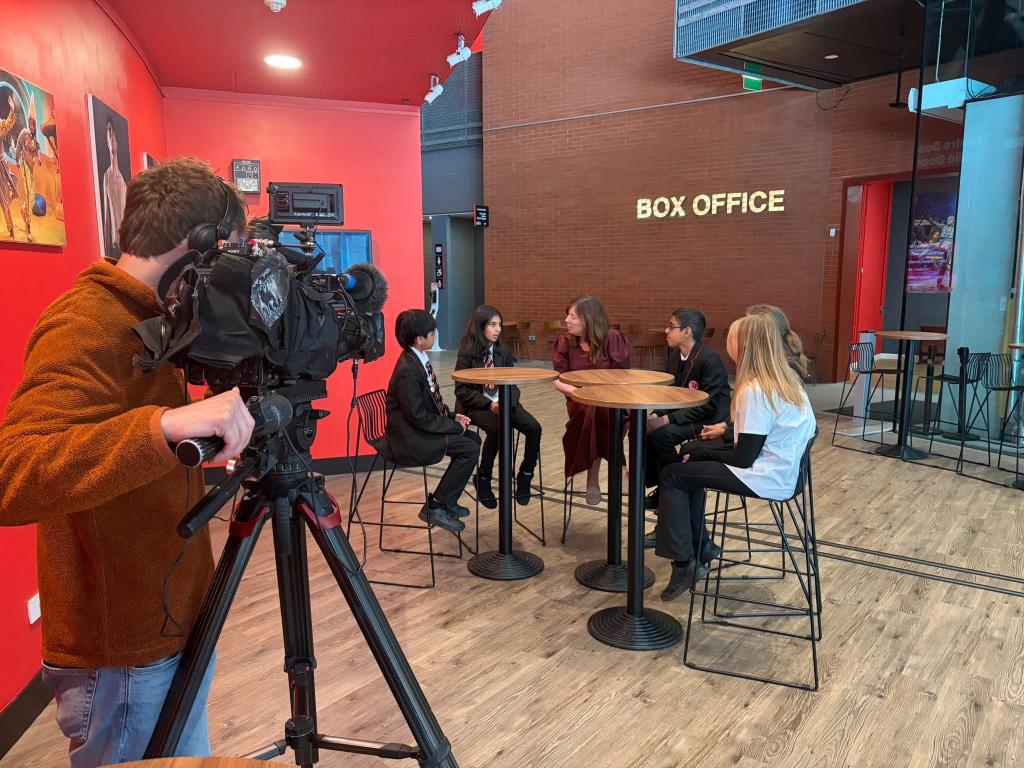
Sometimes it is social. As part of my roadshow promoting The Big Future, my survey of all children in England aged 0 to 18, I visited two places that literally help children find their voices: Nottingham Playhouse and the Curve Theatre in Leicester. The thread that unites these two spaces is that the young people I spoke to so clearly valued the theatre programmes they ran for their own sake, but also for the space they gave them to speak, to be themselves, to try and fail and try again. As one child put it at the Curve: “Acting and performing arts is like putting on a sort of mask, it makes you more brave and less insecure… because I’m playing a character that isn’t me.”
This, as much as anything else, is why I think the arts are so important. They give us the crutches we need to understand our world and ourselves, written by the greatest minds who ever lived. They give children spaces to be themselves, to try things on and to fail, to inhabit perspectives that are not their own and to discover the things they can do with their physical voice. One of the things I have heard about is the need for children to learn to experience risk; to learn to live with uncertainty, to test the limits of their world. This is true physically, but it is also true emotionally, and the boards of the stage can serve as the playground for this kind of experimentation.
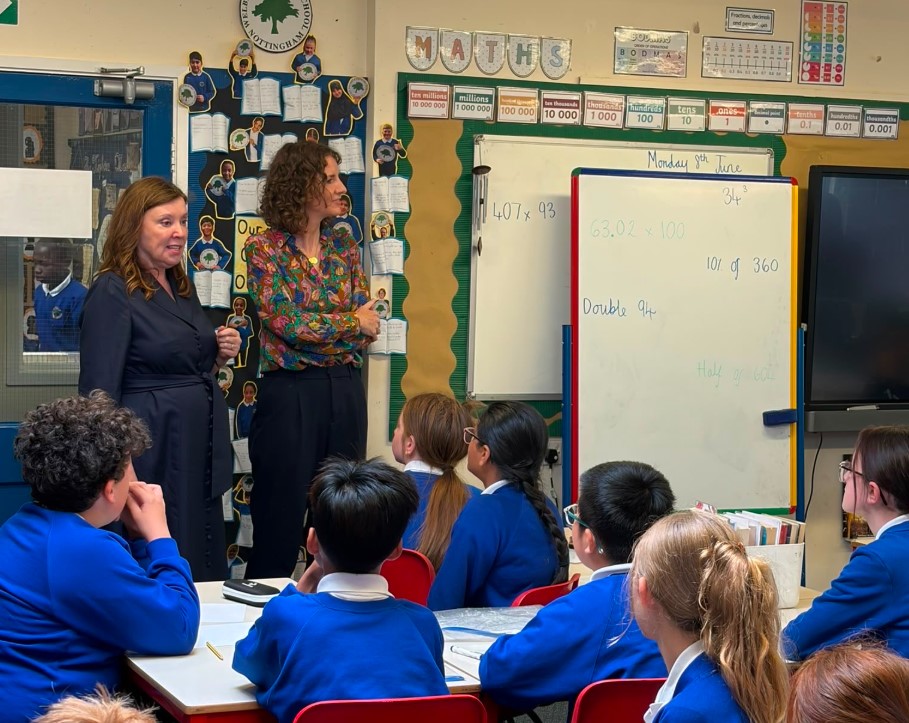
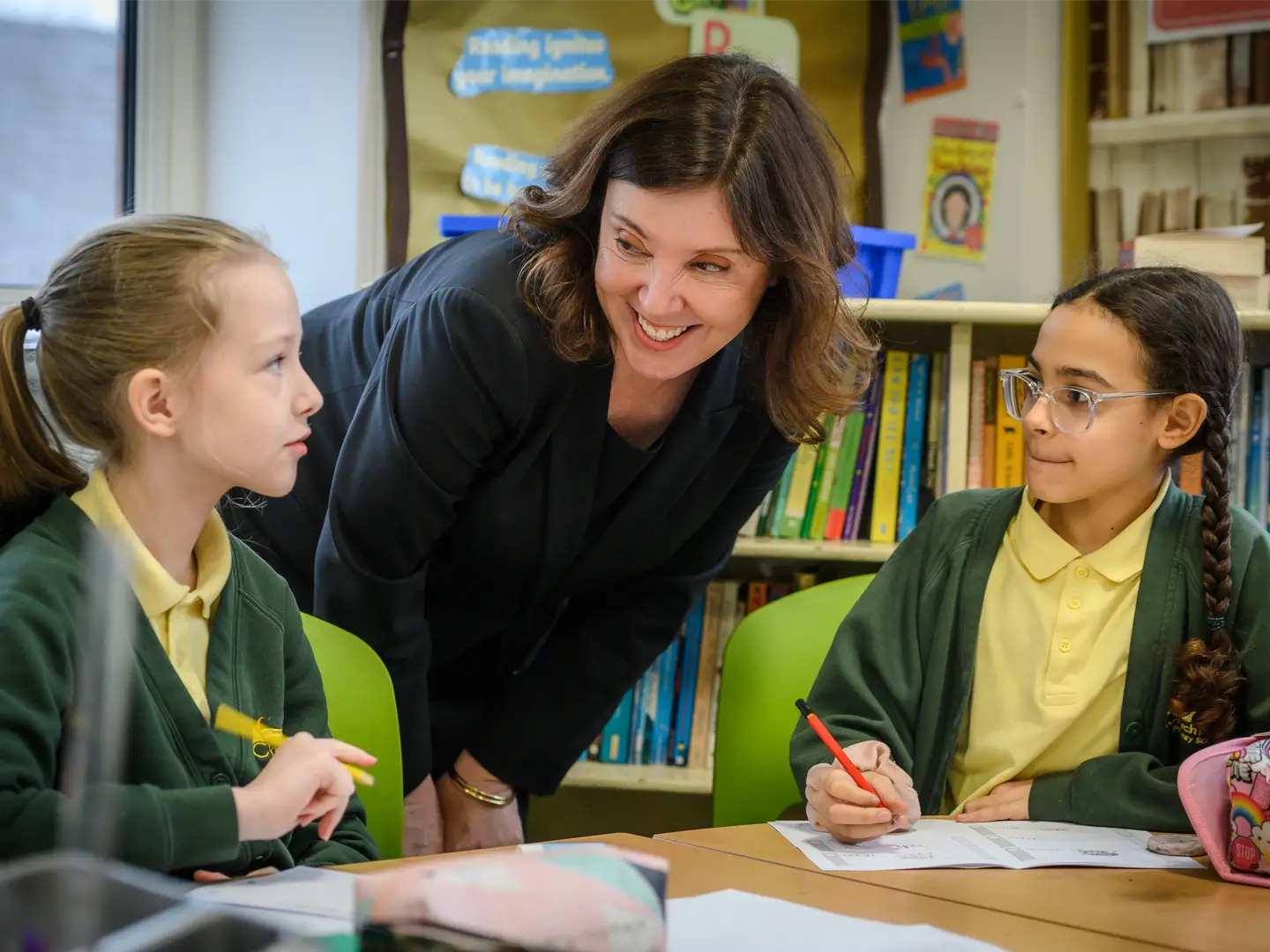
And then, there is the literal. At Welbeck Primary School in Nottingham, I heard from an incredibly thoughtful group of pupils. Belonging comes naturally to these children, not because they are naturally more conscientious than others, but because it is so clearly ingrained into the school ethos and staff actions. Pupils could reel off exactly what happened when new children joined the school – the assembly, the welcome basket. And they reflected on how they helped each other. One boy explained that the girl four children to his right had helped him when he had arrived as a refugee, especially as he didn’t speak English when he arrived. I asked her about helping, and she told me that, “I didn’t have perfect English either… but I just told him where to put his things, what to do, and helped him that way.”
I know what it means when we give children a voice. I heard it at Welbeck school, from that boy who had learned more or less fluent English over the year or so he’d been with the school. I asked him what he wanted to do when he was older.
He explained that he particularly wanted to help people with cancer, to fight that terrible disease so no one went through it alone. And then he summed up with a smile: “Yeah. I’m so excited to be a doctor… I know most of the words now.”