


In Westminster, the debate around social media use came to a head last week, with the proposed limiting of children’s access to social media.
In the days after the announcement, as part of my tour for my survey The Big Future, I was in Ipswich, answering a question that children have asked me for almost as long as the screen time debate has gone on: “If they ban us from social media, what exactly do they want us to do instead?”
It’s a fair question.
The previous week, at Welbeck Primary in Nottingham, I heard about play specifically designed to encourage risk-taking and the testing of children’s physical limits. It’s a start.
As part of my visit to Suffolk, I spoke to a group of supremely talented young musicians from across the region who had come together to compose pieces about protest for the Aldeburgh Festival. They shared their messages for decision makers – from concerns that climate change is dropping off the agenda to worries about polarisation and fake news. They were a mix of ages coming together to make music, but they also found friendship and a place, as one young person said, where no one is on their phone.
The beautiful and powerful compositions got me thinking about the importance of music in schools. As a headteacher and trust leader, I was deeply proud of my pupils’ academic and pastoral outcomes, but some of my proudest moments were seeing them perform the Hallelujah Chorus from Handel’s Messiah in Norwich Cathedral. As staff in my office will attest, the first question I ask when we put on an event is the same: ‘What music will we have?’
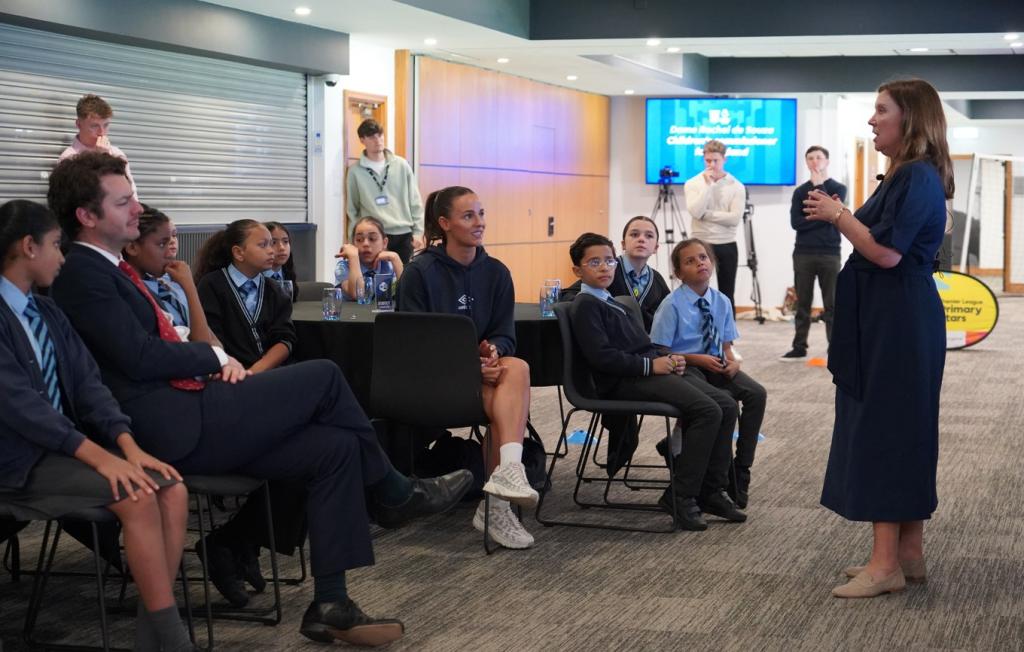
While in Suffolk, I also spoke to children at Northgate High School, and St Matthews Primary – the latter at a session at Ipswich Town FC – about what they like to do when they’re not on social media. I began to see snippets of a fractured landscape from the children I spoke to. One child told me she had been asked to leave a park that was almost empty – at the age of 13, she was considered too old. Another told me that, “For us teenagers, it feels like people assume we’re about to commit a crime just by being somewhere.”
But there were also positive examples. The young people at Northgate High School enjoyed performing arts and outdoors activities. At Portman Road, where I was joined by Ipswich Town FC women’s team captain Maria Boswell and champion boxer Fabio Wardley, the children loved their football, but also parks, cinema and restaurants.
Children are not, on the whole, asking to be rescued from the internet by a more virtuous timetable. They are asking for things that are difficult to legislate for: unsupervised time, space that isn’t fenced off for liability reasons, and spending time with their friends face-to-face.
Maybe it was because I was so close to Norfolk, where I spent so much of my career, but I found myself thinking about an under-discussed part of Norfolk history. In the late medieval period, a woman named Margery Kempe dictated what is now considered the first autobiography written in English. She could not read or write herself, so she found a priest and, effectively, annoyed him into agreeing to act as her scribe. She told him everything – her visions, her arguments with priests, and her travels. Most notoriously, she talked about her habit of weeping and wailing loudly and at length in public, often in church, often to an audience who seemed to have found the whole thing deeply irritating.
And I was thinking about those wails in church and what they might be today. The cries of young people today are different, the horrors of growing up online, growing demand for mental health support, and brutal struggles to get a first job.
Too often, they are met with the same reaction that Margery Kempe got, irritation. But if you listen to those same young people – to their solutions – I think they are being very clear. When I listened to children in Suffolk, what I heard was not a cry for help, it was an answer to a question I keep hearing, ‘What should we do instead of social media?’
The answer was in what they most cherished, and what so many children want: a space where they can flourish without needing to achieve. Whether that is at a football club, a youth orchestra, or a Scout group.