

I spend a good deal of my time as Children’s Commissioner pointing out what happens when things do not work as they should. Perhaps because of this, I find myself often commenting at the sharpest end of state failures; what happens when something goes really wrong, when the state behaves in a way that feels callous or wicked – in short, when it fails to respect the fundamental rights that every child is owed under the UN Convention on the Rights of the Child.
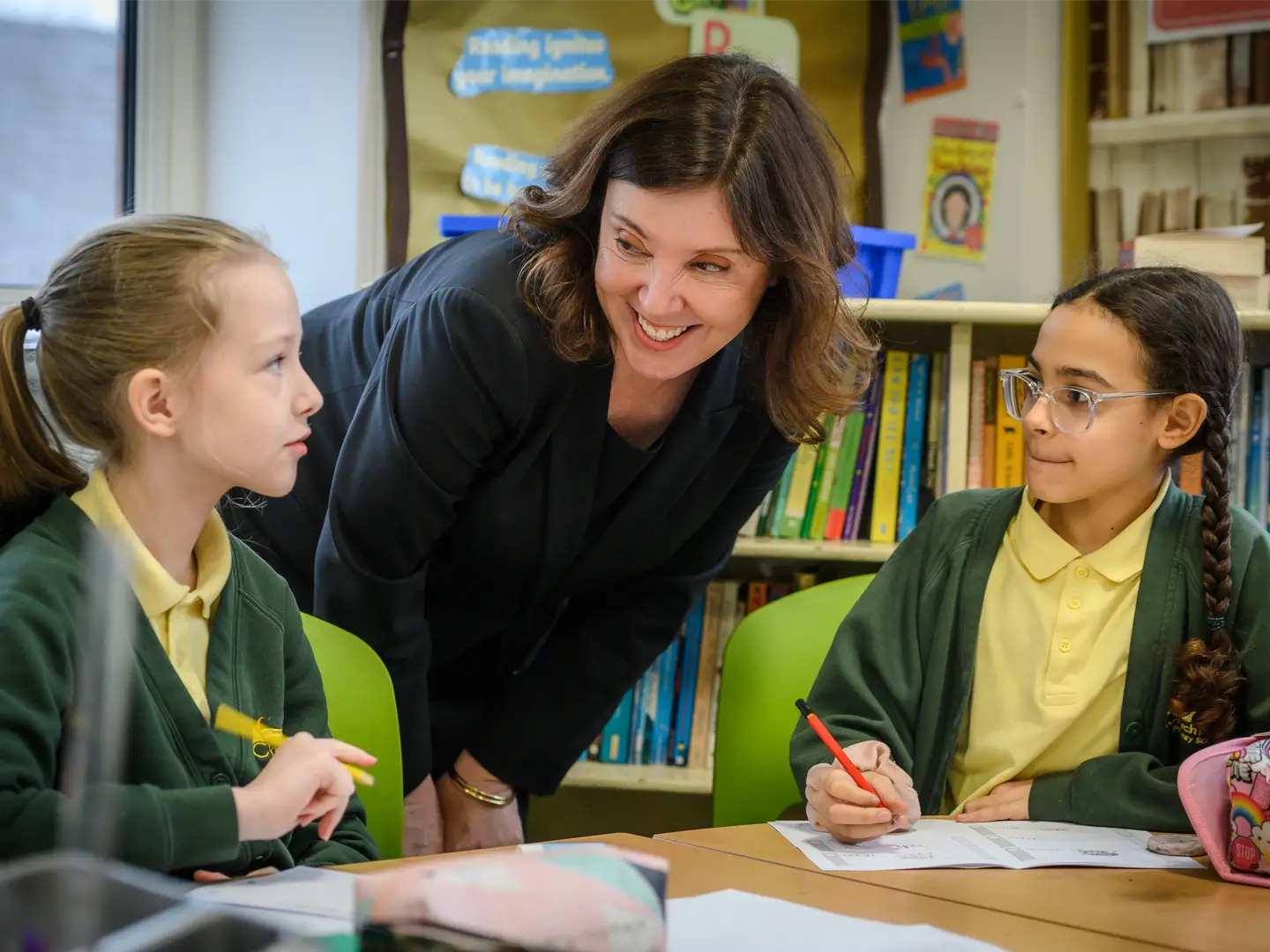
But this week, I want to focus my reflections on children’s stories of success that are positive and feel deeply achievable. I was in Southampton this week on the latest stop for the The Big Future survey, to visit St Mary’s school, take part in a roundtable on jobs and skills with local civic and business leaders, and – crucially – to hear from young apprentices at Southampton Engineering Training Association (SETA).
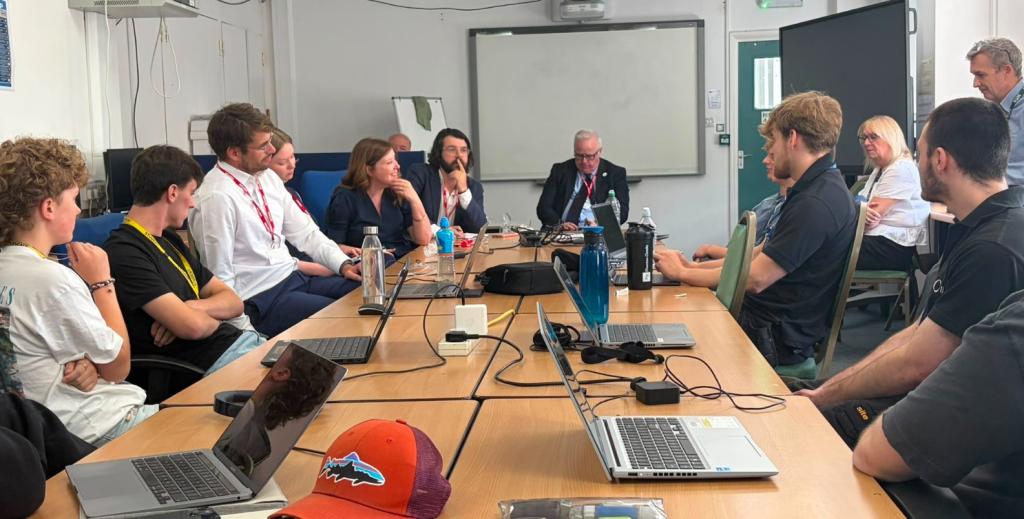
It was heartening to be at the university, and to see civic society and business turn out to discuss the hugely pressing issue of youth employment. I am especially grateful to Prof. Francis Davis for the incredible work he does in this regard, and for his time and expertise while I was in Southampton.
But the best answers of all, as is so often the case, came from young people themselves. I asked them about their journeys to apprenticeships and was initially worried by what I heard. Children have told me, repeatedly across my groups with them over the last weeks and months, about the crushing pressure they find themselves under. They tell me, as I have previously written, about the role comparison plays in their lives. They tell me about the profound precarity that seems to define their worldviews, about how it feels like one wrong step and things will come crashing down around them. Many of the boys I spoke to in Southampton agreed about this, and one apprentice put it remarkably well: “You leave school, and that’s just given to you. And then you’re asked to make these massive decisions – it’s too much, some people just back away from it.”
But we cannot lose sight of the fact that traditional journeys still work. I asked the apprentices about their journeys to that room, to their jobs and their apprenticeships. Most were predictable, and reassuringly so: the boys who’d liked school well enough, but wanted to do something practical. The boy who had always loved both 3-D design and working with his hands.
I heard two examples of what we need the system to do: one boy, for whom this was his third ‘go’ at education and employment – he’d tried college, tried a job, hadn’t liked either, and found himself a new job with an apprenticeship attached. He really liked this one. He thought he’d found the role that fitted him at the third time of asking.
Another apprentice had seen a local engineering firm and asked them for work experience (repeatedly, and via different methods – email hadn’t worked, so he called until he spoke to someone in HR). He’d loved his work experience, and they seemed to have liked him well enough, because when he asked to go back as part of his T-Levels, they’d had him back again. And now he was an employee, sent to Southampton to complete an apprenticeship. He was extremely happy – though he won’t miss travelling between Southampton and his employer’s main base when the apprenticeship is over.
The system can work. Yet I am hearing from other children over and over again about their troubles with the labour market, and their sense that one mistake will ruin their lives.
The question now, as we look ahead to the Milburn review’s recommendations and the potential educational changes a new Prime Minister may bring, is how to create a world where these stories become commonplace.
Where a career can be built with a genuine connection with a local firm. Where it’s okay to realise your first career path isn’t for you, and feel supported to change that via education. We urgently need to build an education system in which the labour market is demystified and tangible, and which allows children to try and both fail and succeed as they learn and grow.